 0
0
 0
0
Stepping into a dense woodland with a camera for the first time can be an overwhelming experience. Unlike the grand, sweeping vistas of the Grand Canyon or the jagged peaks of the Rockies, the forest does not offer its beauty on a silver platter. It is a chaotic, vertical world where branches overlap, light flickers inconsistently, and the sheer volume of green can lead to flat, uninspired images. However, capturing the “spirit” of the woods is not about documenting every tree; it is about finding the quiet stories hidden within the shadows. To transition from a casual snapper to a mindful nature photographer, one must learn to see the forest not as a collection of wood and leaves, but as a living gallery of textures, moods, and intimate moments.
Decoding the Visual Language of the Forest
The primary challenge of woodland photography is “visual clutter.” Beginners often try to fit too much into the frame, resulting in a photo where the eye has no place to rest. To capture the essence of the wilderness, you must become a master of subtraction. Instead of looking for a wide-angle shot of the entire forest, look for a single subject that embodies the environment. This could be a solitary ancient oak, a cluster of ferns catching a stray beam of light, or the way a winding path disappears into the mist.
Composition in the woods relies heavily on leading lines. However, these lines aren’t always obvious. Use the verticality of the trunks to create a sense of rhythm and depth. When you align several trees in a row, you create a visual “layering” effect that pulls the viewer into the image. Furthermore, don’t be afraid of the “mess.” Deadwood, fallen leaves, and tangled roots are essential parts of the forest’s lifecycle. The key is to use a shallow depth of field—achieved by using a wider aperture—to blur the background and isolate your subject. This technique softens the chaos and transforms a messy thicket into a dreamlike, ethereal backdrop.
To truly elevate your work, you should focus on the following elements that often go unnoticed by the untrained eye:
- The intricate patterns of lichen and moss on North-facing bark.
- The “crown shyness” where the tops of trees refuse to touch, creating rivers of sky between them.
- The micro-landscapes found on the forest floor, such as fungi or emerging saplings.
- The interplay of negative space between branches during the “blue hour” just before sunrise.
- The way moisture clings to spiderwebs in the early morning dew.
By focusing on these specific details, you provide the viewer with a sense of place that a wide-angle shot simply cannot convey. You are not just showing them a forest; you are showing them the heartbeat of the ecosystem.
Mastering the Subtle Palette of Woodland Light
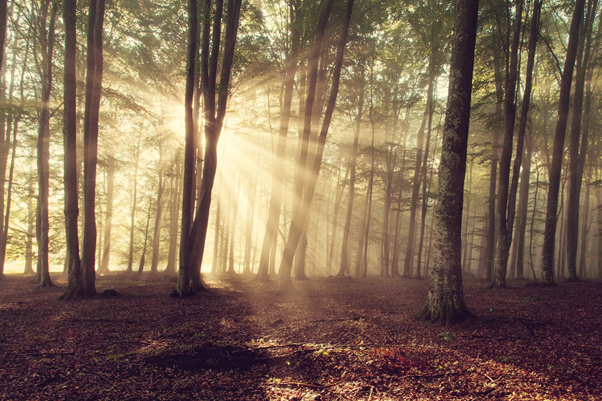
Light is the brush with which a photographer paints, but in the woods, that brush can be unpredictable. Many beginners make the mistake of heading out on bright, sunny days. While sunshine is great for a picnic, it is often the enemy of forest photography. Direct sun creates “hot spots”—harsh white highlights—and deep, black shadows that digital sensors struggle to balance. This creates a high-contrast mess that obscures the natural textures of the bark and foliage.
The secret shared by professional nature photographers is that the best “woods weather” is actually overcast, foggy, or even slightly rainy. A cloudy sky acts as a massive, natural softbox, diffusing the light evenly across the canopy. This saturation brings out the deep greens of the moss and the rich browns of the earth. Fog is perhaps the most coveted condition of all. It provides natural separation between the layers of trees, fading the background into a soft white haze and giving the image a sense of immense scale and mystery.
If you do find yourself shooting on a sunny day, look for “mottled light” as an artistic choice rather than a hindrance. Wait for the sun to drop lower in the sky—during the golden hour—when the rays hit the leaves at an angle. This backlighting can make leaves appear to glow from within, a phenomenon known as translucence. It turns a simple green leaf into a vibrant, stained-glass masterpiece.
The Ethical Lens: Photography as Stewardship
As we explore the deeper reaches of our national forests and reserves to find that perfect shot, we must remember that the camera is a tool for conservation. The philosophy of “Leave No Trace” is just as applicable to photographers as it is to hikers. Staying on marked trails is crucial, even if the perfect angle seems to be ten feet into a protected meadow. The weight of a photographer and their tripod can crush delicate undergrowth that takes years to recover.
Expert nature photography is rooted in patience and respect. It is about sitting still long enough for the forest to forget you are there. When you stop moving, the wildlife returns, the wind whispers through the needles, and the true “spirit” of the place reveals itself. Your goal is to capture a moment that inspires others to protect these sacred spaces. A photograph of a pristine, untouched forest serves as a silent plea for its preservation. When you share your work on platforms like Sawnee Mountain, you aren’t just showing off your skills; you are becoming an ambassador for the wild. The most successful images are those that make the viewer feel the dampness of the air and the silence of the trees, fostering a connection that transcends the digital screen.