 0
0
 0
0
People who spend serious time in American wildlife refuges develop a particular relationship with unmanaged landscape. They know the difference between a place that looks wild and a place that is wild. They notice when the ecological processes are intact: when the predators are present, when the water moves through the system naturally, when the bird populations reflect a functioning food chain rather than a managed remnant. That kind of attention is not easily satisfied by ordinary travel destinations.
Iceland is not an ordinary travel destination. The island sits on the Mid-Atlantic Ridge, where the North American and Eurasian tectonic plates are actively pulling apart at a rate of about two centimetres per year. The geological processes that shaped the American West over millions of years are happening here in real time. Geysers erupt on schedule. Lava fields cool and crack and are colonised by moss at the rate of a centimetre per decade. Glaciers calve into lagoons the colour of glacial meltwater, which is a blue that has no common name. A day trip from Reykjavik puts you inside that process in a way that no American wildlife refuge, as spectacular as many of them are, can match.
Here are eight reasons it belongs on the list.
1. The Golden Circle Covers Three Distinct Natural Systems in a Single Day
The most popular day trip route from Reykjavik, the Golden Circle, takes in Þingvellir National Park, the Geysir geothermal field, and Gullfoss waterfall within a roughly circular 300-kilometre drive. Each of the three sites represents a different Icelandic natural system operating at full scale.
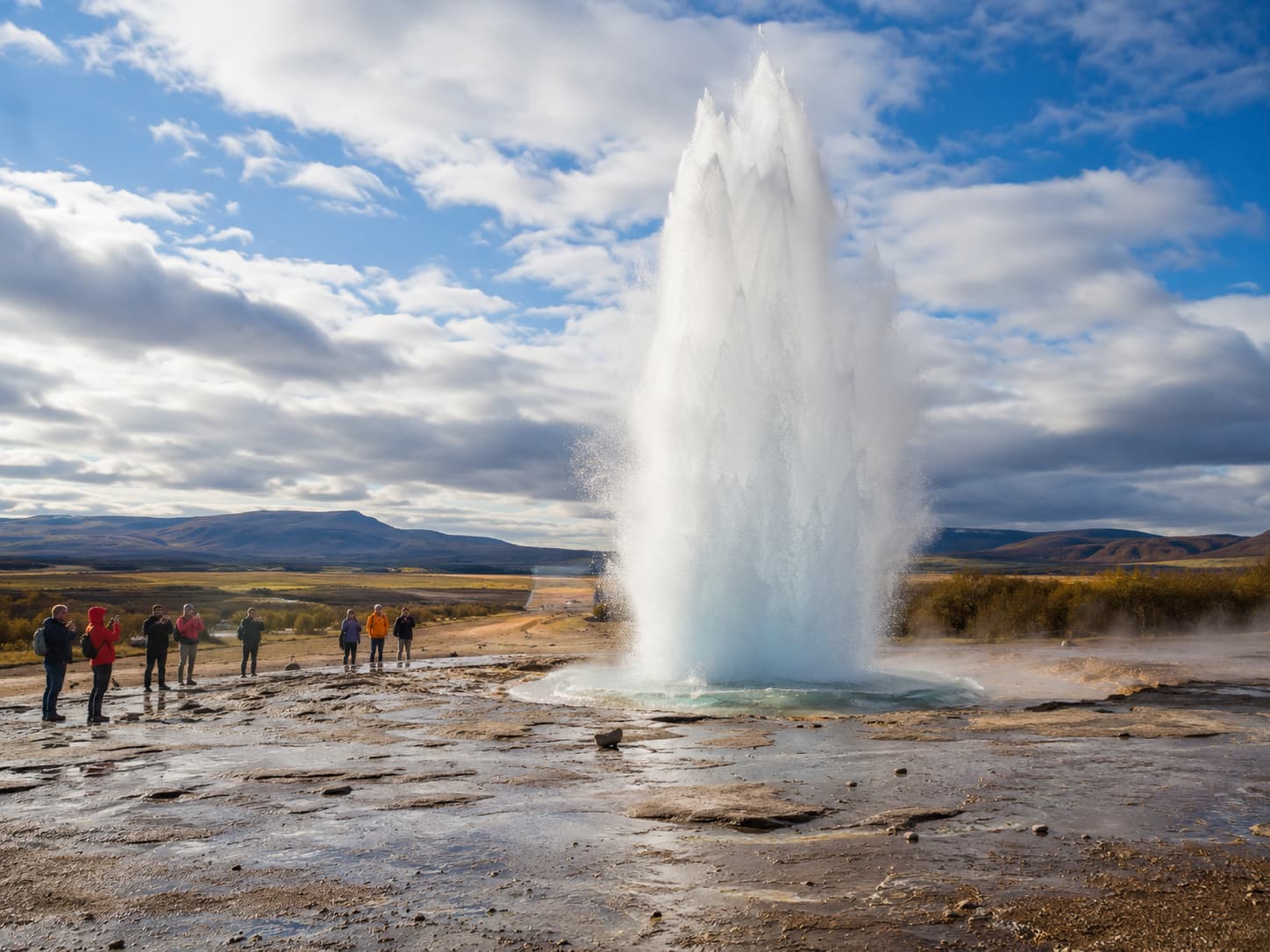
Þingvellir sits directly on the rift valley between the North American and Eurasian plates, where the ground has subsided over millennia as the crust pulls apart. The Öxará River flows through the rift and into Þingvallavatn, Iceland’s largest natural lake, which is fed partly by glacial meltwater filtered through the lava rock and is among the clearest freshwater bodies in Europe. At Geysir, the Strokkur geyser erupts every five to ten minutes, sending a column of superheated water eight to thirty metres into the air above a silica-lined crater that has been active for centuries. Gullfoss drops 32 metres in two stages into a canyon that the Hvítá River has cut through the basalt over thousands of years. Three ecosystems, three geological processes, one day. For wildlife refuge visitors accustomed to planning multi-day itineraries to cover comparable ecological variety, this density of accessible natural experience is worth noting.
2. The Bird Cliffs at Látrabjarg Hold One of the World’s Largest Seabird Colonies
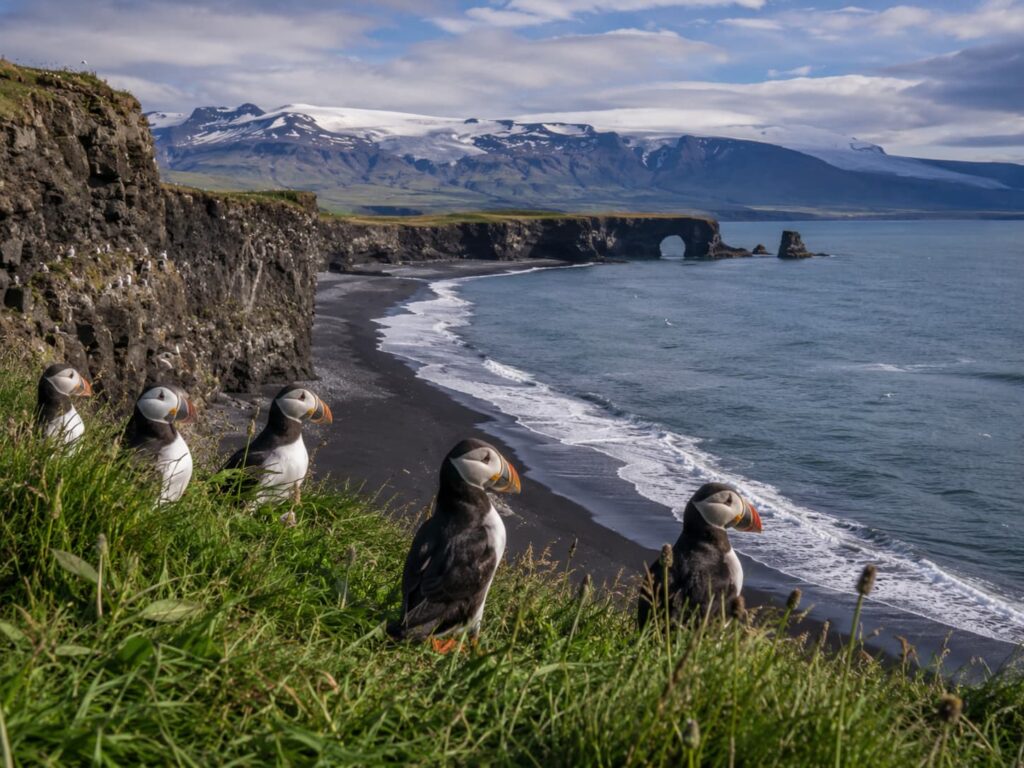
The Látrabjarg cliffs on Iceland’s Westfjords peninsula extend for 14 kilometres along the Atlantic coast and rise to over 440 metres, making them the largest bird cliffs in Europe. The colony they support during the breeding season includes puffins, razorbills, guillemots, kittiwakes, and fulmars in numbers that have to be seen to be understood. Estimates put the puffin population alone at several million birds during peak season, and the noise and movement of the colony at close range is unlike anything available at a North American wildlife refuge outside Alaska.
The puffins at Látrabjarg are unusually approachable. They nest in burrows cut into the cliff edge and are accustomed to visitors walking within a metre or two without flight response. Photographing a puffin at close range with a standard lens, watching it return to its burrow with a beak full of sand eels, is an experience that wildlife photographers travel specifically for and that the Látrabjarg colony makes accessible to anyone who can make the drive. For nature photographers whose work in American refuges has focused on shorebirds and colonial nesters, this is a direct and immediately applicable skill transfer to a completely different species set.
3. The Snæfellsnes Peninsula Covers Volcanic, Coastal, and Glacial Ecosystems Side by Side
The Snæfellsnes Peninsula, about two hours’ drive northwest of Reykjavik, is sometimes called Iceland in miniature: a narrow finger of land with a glacier-capped stratovolcano at its tip, lava fields along its southern coast, sea cliffs and sea stacks on its northern shore, and a series of small fishing villages that have been operating in the same locations for centuries. The Snæfellsjökull glacier, which Jules Verne used as the entry point to the centre of the earth in his 1864 novel, is visible from Reykjavik on clear days and dominates the peninsula’s western skyline throughout the day trip route.
The bird life on the northern coast of Snæfellsnes is varied and accessible: arctic terns nesting on the lava beaches, eider ducks in the sheltered coves, gyrfalcons over the inland heath. The coastal lava fields support a plant community built almost entirely of pioneer species in various stages of colonising bare rock, which makes the ecology here directly comparable to the early succession communities that refuge managers study in newly protected areas after industrial or agricultural use has been removed.
4. Iceland’s Geothermal Landscape Is a Live Demonstration of Ecological Succession on Bare Rock
Much of Iceland’s landscape is geologically young. The lava field that covers the Reykjanes Peninsula south of Reykjavik is in places only a few centuries old, and the succession sequence from bare black rock to fully vegetated heath is compressed enough to observe across a single hillside. Moss colonises first, building organic matter in the cracks. Then grasses and sedges establish in the moss mats. Then dwarf shrubs follow as the soil deepens. The whole process that takes geological time in most landscapes happens here on a human timescale.
For wildlife refuge visitors and conservationists who think about habitat restoration, Iceland’s young lava fields are a working model of what bare substrate becomes when left alone. The comparison to restoration sites within American refuges, where managers are trying to return disturbed land to functional habitat, is direct. The Icelandic landscape shows what the process looks like without any management intervention, which is the baseline against which managed restoration is measured. As our coverage of the healing power of nature and national parks explores, the restorative value of wild places is connected to the sense that ecological processes are intact and unmanaged. Iceland’s lava succession provides that quality at an intensity that is hard to match.
5. The Jökulsárlón Glacier Lagoon Is One of the Most Photographically Demanding Landscapes on Earth
Jökulsárlón is a glacial lagoon at the terminus of the Breiðamerkurjökull glacier on Iceland’s south coast, about four and a half hours’ drive from Reykjavik. The lagoon fills with icebergs calved from the glacier face, which drift slowly toward the narrow channel connecting the lagoon to the sea. The icebergs range from the size of a car to the size of a small building. They are blue in their cores, white at their surfaces, and constantly changing shape as they melt and roll in the water.
Diamond Beach, where the icebergs that make it through the channel wash up and melt on a black sand shore, is the kind of landscape that photographers describe in terms of the problems it poses rather than the opportunities it provides. The contrast range between the ice and the black sand challenges any metering system. The light at this latitude in winter changes faster than most bracketing sequences can track. The ice itself is never the same shape twice. For wildlife refuge photographers whose work on the atmospheric photography challenges in forest environments has developed their technical range, Jökulsárlón extends that range into a completely different set of optical problems in a landscape that operates at a different spectral register entirely.
6. Guided Day Trips Cover Distances and Conditions That Independent Driving Misses
Iceland’s roads in winter are subject to closures, ice, and visibility conditions that make independent driving in a rental vehicle a variable and sometimes restricted experience. The F-roads that access the highland interior are closed to standard vehicles outside the summer months entirely. The coastal roads are affected by storm conditions that can shift within hours. Knowing which routes are accessible on a given day, which sites are worth the drive in current conditions, and which alternative destinations offer comparable experiences when the primary route is closed requires local knowledge that visitors cannot reasonably acquire in advance.
Operators like Day Trips From Reykjavik run structured excursions with guides who monitor road conditions in real time, adapt itineraries to weather, and know which volcanic, glacial, and wildlife sites offer the best experiences across different seasons and conditions. For nature travelers who want the full range of Iceland’s accessible natural environments rather than the subset reachable by standard rental vehicle in variable winter weather, a guided approach removes the logistical constraints that would otherwise limit the experience significantly.
7. The Arctic Fox Is Iceland’s Only Native Land Mammal and Worth the Effort to Find
Iceland has no native land mammals except the arctic fox, which colonised the island by walking across sea ice from mainland Europe following the last glaciation. The fox has been hunted since settlement and its population remains relatively low, but the Westfjords region, where human density is minimal and the terrain is rough enough to limit land use pressure, holds the densest population on the island. The Melrakkasetur arctic fox research centre at Melrakkanes in the Westfjords runs a long-term monitoring program that is one of the most sustained wildlife population studies in the North Atlantic region.
Finding arctic fox requires the same approach that works for elusive mammals in American refuges: early morning or evening light, patience, and local knowledge about territory boundaries and denning sites. The fox changes coat twice a year, from summer brown to winter white, and the transition coats in autumn and spring produce the kind of variable pelage that wildlife photographers spend significant effort to document. For refuge visitors whose North American mammal list is well-developed, the arctic fox offers a fresh subject in a landscape that has no equivalent.
8. Iceland’s Bird Diversity Along the South Coast Rewrites Expectations of Subarctic Ecology
The south coast of Iceland, accessible on a day trip from Reykjavik via the Ring Road, holds a concentration of wetland and coastal habitats that support bird diversity well beyond what the subarctic latitude would suggest. The river deltas and lagoons between Selfoss and Vík are important stopping points for migratory waders moving between Arctic breeding grounds and African wintering areas. The coastal cliffs at Dyrhólaey hold nesting fulmars, guillemots, and puffins through the summer. The black sand beaches support foraging shorebirds across the spring and autumn migration windows.
The whooper swan, which breeds in Iceland and overwinters in the British Isles and Western Europe, is visible on many of the freshwater lakes and wetlands along the south coast route from late summer through spring. Pink-footed geese stage in large numbers in the river valleys before their autumn departure. Harlequin ducks, a species that wildlife refuge visitors with experience in the Pacific Northwest will recognise, breed along Iceland’s glacial rivers in conditions that reflect their need for cold, fast-moving water with high invertebrate biomass. Each of these species is observable in a day without specialist access or extended fieldwork, which makes the south coast route one of the most productive single-day birding circuits available anywhere in the North Atlantic region.
A Final Thought
The American wildlife refuge system is one of the great conservation achievements of the 20th century, and the landscapes it protects deserve the attention this blog gives them. Adding Iceland to the travel list is not a distraction from that commitment. It is an extension of the same instinct: to spend time in places where ecological processes are intact, where the scale of the natural world is legible, and where the experience of being outside and paying attention produces something that indoor life does not.
Iceland’s day trips from Reykjavik offer that experience in a geological context that American refuges cannot replicate. The lava fields, the geyser basins, the bird cliffs, the glacier lagoons, the arctic fox in winter coat against black sand: these are the reference points that a wildlife refuge traveler comes home wanting to describe and finding, as the best Icelandic landscapes tend to produce, that the familiar language falls short.
That gap between experience and description is where the best nature writing lives. Iceland keeps opening it wider.